As the Philippines moves toward 2026, fresh data from the Bangko Sentral ng Pilipinas (BSP) point to growing caution across the business sector. While the economy benefited from seasonal holiday spending toward the end of 2025, forward-looking indicators reveal mounting concerns over demand, governance, inflation, and currency stability. Together, these pressures have pushed business confidence to its weakest level in four years—raising important warning signs for policymakers, investors, and corporate leaders.
Business Confidence Falls Sharply Heading Into 2026
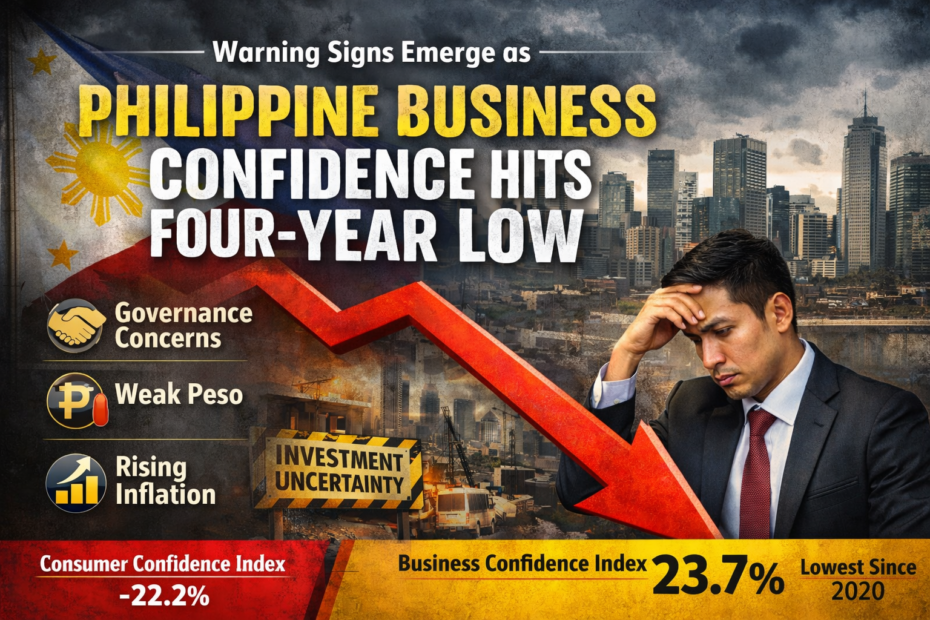
The BSP’s Fourth Quarter 2025 Business Expectations Survey shows a steep decline in sentiment for the first quarter of 2026. The confidence index dropped to 23.7% from 49.5%, marking the lowest reading since the fourth quarter of 2020. This sharp fall reflects expectations of a post-holiday slowdown in economic activity, combined with broader structural and policy-related uncertainties.
Firms cited weaker demand for goods and services after the holiday season as a primary concern. Beyond seasonal effects, respondents highlighted governance-related risks, including corruption allegations that could erode investor confidence and disrupt public infrastructure projects. Peso depreciation and rising inflation were also identified as key challenges, adding pressure to operating costs and consumer purchasing power.
Year-Ahead Outlook Also Softens
The cautious mood is not limited to the next quarter. Businesses also revised down their outlook for the year ahead, with the 12-month confidence index sliding to 40.4% from 48.1%. Firms expressed concern over the sustainability of domestic demand, persistent inflationary pressures, exchange rate volatility, and the risk of an economic slowdown if public spending weakens.
This softer outlook suggests that companies are becoming more selective with expansion plans, prioritizing cost control and operational efficiency over aggressive growth in 2026.
Short-Term Optimism From Holiday Spending
Despite the weakening forward outlook, sentiment improved for the fourth quarter of 2025 itself. The overall business confidence index rose to 29.7% from 23.2%, supported by strong holiday-related consumer spending, business process improvements, and ongoing expansion initiatives. Some firms also cited relatively manageable inflation conditions during the quarter, offering temporary relief.
However, this improvement appears largely seasonal and does not fully offset concerns about the months ahead.
Consumers Remain Under Pressure
Consumer sentiment paints an even more cautious picture. The BSP’s Consumer Expectations Survey showed the overall consumer confidence index falling deeper into negative territory, dropping to -22.2% from -9.8% in the fourth quarter of 2025.
Households pointed to concerns over graft and corruption, higher inflation, lower incomes, and the impact of unfavorable weather and natural disasters. Looking ahead, consumer optimism continued to fade, with confidence for the first quarter of 2026 easing to 3.6%, while the year-ahead index declined to 11.8%.
What the Warning Signs Mean
The combination of weakening business confidence and fragile consumer sentiment signals potential headwinds for the Philippine economy in 2026. While the country has shown resilience, restoring confidence will depend on containing inflation, stabilizing the peso, ensuring policy continuity, and addressing governance issues that affect investor and household trust.
As 2025 comes to a close, the message from businesses and consumers is clear: caution is setting in, and confidence—once a key strength of the Philippine economy—will need decisive support to regain momentum in the year ahead.