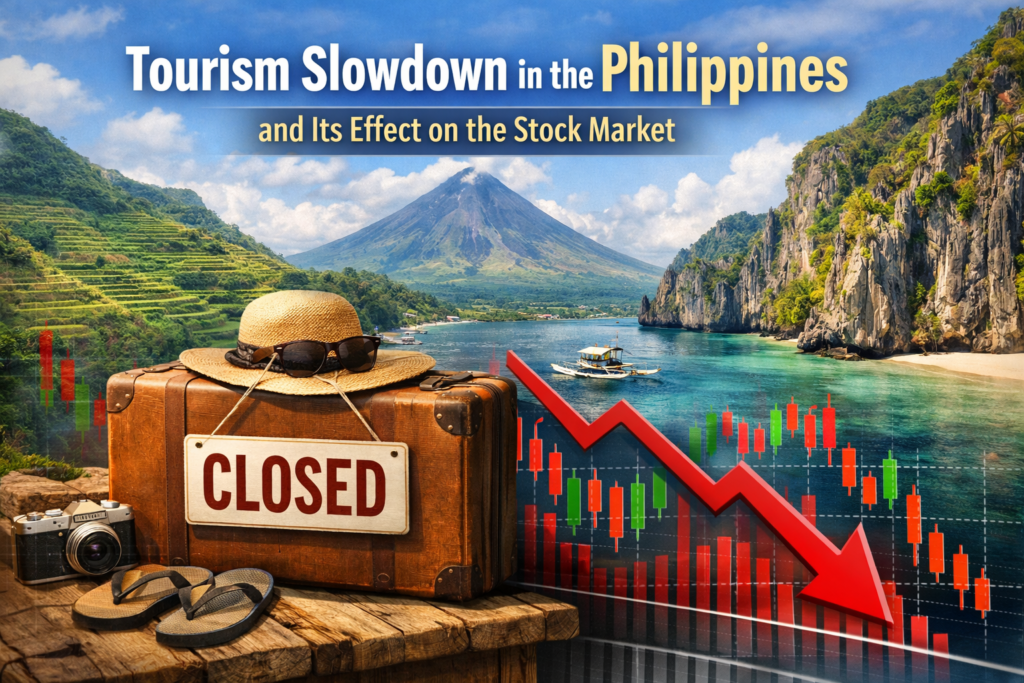
Tourism has long been one of the Philippines’ most promising industries, contributing significantly to GDP and providing livelihoods across hospitality, transport, and retail. Yet in 2025, the country faced a sobering reality: international arrivals stagnated at around 6 million visitors, far below the government’s ambitious target of 8.4 million.
Several factors explain this underperformance:
- Budget cuts to the Department of Tourism (DOT), limiting marketing campaigns and infrastructure projects.
- Suspension of e-visas for Chinese travelers, reducing inflows from one of the Philippines’ largest markets.
- Global headwinds, including rising airfare costs and economic uncertainty, discouraging long-haul travel.
- Corruption and inefficiency, where mismanagement of funds and lack of transparency in infrastructure projects eroded investor and tourist confidence.
Domestic tourism remains resilient, but without strong international arrivals, the Philippines struggles to regain its pre-pandemic momentum. This stagnation has ripple effects across the economy, particularly in the Philippine Stock Exchange Index (PSEi).
Impact on the Philippine Stock Market
The PSEi reflects investor sentiment across major sectors. Tourism plays a subtle but important role in this dynamic:
- Hospitality & Airlines: Listed companies in hotels, resorts, and aviation rely heavily on foreign arrivals. Stagnant tourism numbers limit revenue growth, keeping share prices subdued.
- Retail & Consumer Goods: Tourists drive spending in malls, restaurants, and leisure activities. Weak inflows reduce demand, affecting consumer stocks.
- Real Estate & Infrastructure: Tourism-linked property developments, such as hotels and resorts, see slower investment returns, dampening confidence in real estate equities.
In 2024, the PSEi struggled to stay above 6,000 points. By late 2025, it closed at 6,135.06, showing only modest growth. This reflects cautious investor sentiment, with tourism stagnation acting as a drag on sectors that typically benefit from foreign inflows.
Year-on-Year Market Comparison
|
Year |
PSEi Performance |
Tourism Context |
Investor Sentiment |
|
2024 |
Hovered near 6,000, limited upside |
Tourism recovery slow, arrivals ~6M |
Cautious, dependent on remittances & BPO |
|
2025 |
Closed at 6,135.06 (+1.36% daily gain, modest annual growth) |
Tourism stagnated at ~6M, below target |
Weak confidence in hospitality & consumer sectors |
The data shows that while the PSEi managed slight growth, it lacked the strong momentum seen in regional peers like Vietnam, where booming tourism lifted aviation, retail, and property stocks.
🌏 Southeast Asia Tourism Comparison (2025, USD)
|
Country |
International Arrivals (2025) |
Tourism Revenue (USD) |
Trend vs. 2024 |
Key Notes |
|
Philippines |
~6 million |
≈ $9.5–10 billion USD |
Flat vs. 2024 |
Strong domestic tourism, but weak foreign arrivals due to budget cuts & visa issues |
|
Vietnam |
21.5 million |
$38 billion USD |
+20.9% |
Visa reforms, aggressive marketing, and infrastructure expansion fueled record-breaking growth |
|
Thailand |
32.97 million |
≈ $75 billion USD |
−7.2% arrivals |
Still dominant in the region despite slight decline; strong domestic travel |
|
Malaysia |
13.38 million (Jan–Apr 2025) |
Projected $20–25 billion USD |
+17.2% vs. 2024 |
Benefited from Singapore, China, and Indonesia markets; strong land border traffic |
How the Philippines is Being Left Behind
- Scale of Arrivals: Vietnam welcomed 3.5x more tourists than the Philippines, while Thailand’s arrivals were 5x higher.
- Revenue Gap: Vietnam’s $38B and Thailand’s $75B dwarf the Philippines’ ~$10B. Even Malaysia, with fewer arrivals than Vietnam and Thailand, generates double to triple the Philippines’ tourism receipts.
- Stock Market Effect:
- Vietnam’s tourism boom lifted aviation, retail, and property stocks, supporting the VN-Index.
- Thailand’s SET Index remains buoyed by its tourism backbone.
- Malaysia’s rebound boosted consumer and transport equities.
- The Philippines’ PSEi showed only modest growth (~6,135 points), constrained by weak tourism inflows.
Why Tourism Matters for the Stock Market
Tourism is more than leisure—it’s a strategic economic driver that influences market sentiment:
- Consumer Spending – Tourists boost demand for food, retail, and leisure, directly impacting listed companies.
- Real Estate Development – Strong tourism supports hotel chains, property developers, and construction firms.
- Investor Confidence – A vibrant tourism sector signals economic vitality, attracting foreign investment.
Without a robust tourism rebound, the Philippines risks missing out on these growth multipliers.
Risks of Continued Slowdown
- Missed GDP contributions: Tourism accounts for a significant share of Southeast Asian economies. Falling behind neighbors reduces competitiveness.
- Stock market drag: Weak tourism limits growth in consumer and hospitality stocks, dampening overall PSEi performance.
- Regional competition: Thailand and Vietnam aggressively expand tourism infrastructure, leaving the Philippines at risk of being overshadowed.
Tourism slowdown in the Philippines is more than a missed opportunity for beaches and resorts—it’s a drag on the stock market and investor confidence. While the PSEi shows modest resilience, its growth is constrained by weak tourism inflows.
Compared to neighbors like Vietnam, Thailand, and Malaysia, the Philippines risks being permanently overshadowed unless decisive reforms are made.
Tourism is not just about leisure—it is a strategic lever for economic and market growth. If the Philippines can reposition tourism as a spearhead industry, it can unlock stronger investor sentiment, boost the PSEi, and reclaim its place in Southeast Asia’s competitive tourism landscape.